Author: Lindsay-Jean Hard
. 
Find deep discounts during the Summer Sale at Mail Order and the Deli
Every July, at Mail Order and the Delicatessen, we drastically discount dozens of products (nearly one for every day of summer) and savvy shoppers gather their go-tos like preserves and olive oil. The Summer Sale is an annual tradition that folks look forward to all year, for stockpiling staples (like Ortiz tuna from Spain, the perennial best-seller) to be sure, but also to plan ahead for future gift-giving. (Did you know? When you shop online at zingermans.com, you can purchase items during the sale and schedule to ship them at a later date!)
With so many items on sale, it can be hard to know where to begin. Start with these 10 Summer Sale highlights:
 Lemon Olive Oil – Look for Colona Lemon Oil at the Deli or Agrumato Lemon Olive Oil at Mail Order. In both cases, the artisans actually press olives and citrus together—no citrus-flavoring or infusing here. Brush it on top of almost any just-broiled fresh fish. Wonderful in vinaigrettes, marinades, or drizzled over simple pasta or good bread. Lynn O. shares, “The lemon oil elevates everything I put it on from salad to popcorn.”
- Zingerman’s Peranzana Olive Oil – Made by Marina Colonna on her ancient estate a little over 100 miles due east of Rome in Italy’s Molise region from hand-picked Peranzana olives pressed the same day they’re taken from the tree.
- Col. Pabst Worcestershire Sauce – This sauce recipe was created by Colonel Gustave Pabst, son of Pabst brewery founder Captain Fredrick Pabst. Kate Quartaro, Gustave’s great-granddaughter, has used the recipe to create a small batch Worcestershire sauce. It has more than 20 ingredients, including malt amber lager from Milwaukee’s own Lakefront Brewery. Guest Jean T. dubbed it “delicious” and admitted to enjoying it “just by the spoonful standing at my kitchen counter.”
- Brooklyn Delhi Achaars – These plant-based, small-batch sauces are rooted in time-honored Indian culinary traditions and layered with a modern spin, like using less salt, so the flavor of the produce is really able to shine through.

- Koeze Peanut Butter – Made on the other side of the state in Grand Rapids, Jeff Koeze sources great Virginia peanuts, blanches and roasts them, adds a touch of sea salt, and then grinds them. The result is an intensely flavorful traditional peanut butter with far more personality than the commercial stuff. Guest Robert D. declared, “The Koeze Peanut Butter is the best out there. It is the platonic ideal of peanut butter.”
- Organic Portuguese Sea Salt – This delicate salt comes from the southern tip of Portugal, where sea salt has been collected and exported since the 11th century, though was waning in popularity. The folks at Belamondil have revived the traditional methods—refashioning salt pools and harvesting with centenary salt pans. This has restored the local ecosystem in the process, helping to bring birds like egrets and herons back to the area.
- Marcona Almonds – The king of the almonds, these rich, meaty Marconas from Spain are skinned, oil-roasted, and then kissed with sea salt. Not only is Mail Order’s Brad Hedeman never without a couple of bags in his pantry, he admits to storing them at the top of the pantry so his kids don’t spot them! (Lest you think this is harsh, guest Sara S. lamented, “I should have ordered more bags of the Marcona almonds. My ten-year-old ate them all in about 15 minutes!”)
- Pistacchiosa – Sicilian pistachios are blended with extra virgin olive oil to give this sweet spread an exceptionally smooth texture. Spoon it over cheesecake, drizzle over fresh goat cheese, or spread on warmed bread. (Or go for a spoonful straight from the jar!). At a Deli tasting event, the Bakehouse’s Corynn Coscia’s then-6-year-old rated it a 100 on a scale of 1 to 10.
- Wild Fennel Pollen – Fennel pollen is exactly what it sounds like—pollen from the flowers of a fennel plant! Sweet, pungent, and everything best about fennel. Delightful with fresh cheeses, ripe tomatoes, and pork. Guest Alicia C. raved, “Used a little of the Wild Fennel Pollen to season my whole roast chicken and it took the flavor and aromatics to a whole new level! This truly is a magic spice that makes anything you put it on so much more wonderful! Where has this been all my life?!”

- Moon Shine Trading Co. Tupelo Honey – This honey comes from north Florida, along the Apalachicola River basin, where bees feed on the pale green flowers of the Ogeechee tupelo, a shrubby tree that grows in the swamps. Beekeepers mount hives on 14-foot platforms, then harvest the honey on barges! The resulting honey is fruity and floral, smooth and pourable—a real treat on pancakes!
The annual Summer Sale goes through July 31 (If you like last-minute shopping, you have until midnight Eastern time.) So load up on all of these items and loads more full-flavored, deeply discounted foods and gifts. Fill the freezer. Cram the cabinet. Get ahead on gifting.
Shop the Summer Sale in person at the Deli or online at shop.zingermansdeli.com for pick up or local delivery. Shop from Mail Order online at zingermans.com to ship an order anywhere in the country.
Should you be reading this in August, well, mark your calendar for next year’s Summer Sale!
This originally appeared in the May / June edition of Zingerman’s News.
Author: Lindsay-Jean Hard

Warning: this news may increase your need for a nosh! Zingerman’s aesthetic is instantly recognizable and well-known here in Ann Arbor and across the country, due to our unique use of hand-painted images gracing the windows of our flagship Deli, the walls of Zingerman’s Roadhouse, the pages of our catalog, and beyond. It’s all thanks to the hand-painted art that comes from the illustrators at Zingerman’s Creative Services* (or ZCS for short), part of Zingerman’s Service Network, a business that provides shared services to the Zingerman’s Community of Businesses. Illustrator Ian Nagy helped develop Zingerman’s distinctive style; he joined the Zingerman’s team a few years after the Deli first opened (and still works here today!). Over the years, several other illustrators have also contributed to our catalog of one-of-a-kind artwork; now, that artwork is for sale!
These are all original pieces of handmade art, not prints, so you won’t find them anywhere else! Hand-done in pencil, ink, and/or paint, each one captures the spirit of fun, food, and community that is Zingerman’s. You’ll be amazed at how their delicious details and colors come to life up close and in person. Claim your very own exclusive piece of Zingerman’s, and check back often, we’re always adding more pieces.
Meet the Artist
While multiple people have created artwork for Zingerman’s over the years, the first collection of artwork available for purchase is all the work of Ian Nagy, a lifelong artist and illustrator. He’s a 6-time Print Magazine award winner and his work is published in a dozen books. Born and raised in Ann Arbor, Ian joined the Zingerman’s team in 1991 and continues to be an immeasurable contributor to the brand. As he puts it, “I draw food for money! Best job ever.” …perhaps that’s in part because he often gets to eat the subject!
From zany characters like Grandpa Pickle and Bacon Detective to artful still-lifes of artisan olive oil bottles and packages of coffee beans, Ian has created thousands of images in his career thus far—each packed like a Zingerman’s gift box with beauty, whimsy, and the unexpected. Ian shared more about his process on an episode of Michigan Public’s Stateside (starting at 31:00), explaining that his goal is always to make the food feel fun and approachable. Essentially, if you’re at all familiar with Zingerman’s, you’ve certainly seen Ian’s work. As Zingerman’s co-founder Ari Weinzweig concurs:
You will likely have seen his work all over the walls of our businesses. It’s featured in every Mail Order catalog you get in the post, on print newsletters, menus, clothing, posters, and packages. You’ve maybe seen it on our various delivery vehicles and in Zingerman’s emails that are delivered to your inbox. I see his other stunningly beautiful scratchboards every time I stock or sign one of the Zingerman’s Press pamphlets or books, or hand out one of my business cards. Ian’s art is there, too, whenever I show someone the new Zingerman’s snowboards and skis made by the artisan producer Gilson Snow in Pennsylvania. And it’s also been in front of me a lot lately with the fantastic label he drew for the new RoHo Joe Stout that Mothfire Brewing is making for us. When I open my closet at home, Ian’s art is in abundance printed on the wealth of Zingerman’s t-shirts and sweatshirts I have hanging there.
AADL Art Exhibit
In addition to being able to peruse (and purchase) Zingerman’s artwork online, the initial compilation of over 100 Ian Nagy originals, hand-selected from our archives, is featured in an exhibit at the downtown branch of the Ann Arbor District Library. Experience their delicious details and colors up close and in person… but please do not lick the art.
The Art of Zingerman’s: A Feast for the Eyes will run through April 18, 2024. The exhibit is free and open 10 am to 8 pm daily. All pieces purchased during that time will remain up and part of the exhibit for its duration. After the exhibit closes, purchased artwork will be available for pick up or shipped out, starting on April 20, 20204. (Find pick-up information here.) Ari calls the exhibit “one of the most meaningful achievements of our many years in business,” adding it’s a measure of success that we have
created a workplace where a pathbreaking artist who’s been in residence in a food business in a small town in the American Midwest for the last 33 years can put their daily practice and ethos on the walls for others to absorb and appreciate.
Pick out the piece that belongs on your wall!
*Zingerman’s Delicatessen sells large-scale painted promotional posters. Shop those here.
To keep up with the buzz on all of the latest happenings in the Zingerman’s Community, follow us on social media: @zingermanscommunity on Instagram and Facebook, and @zingermans on X (formerly Twitter).
Author: Lindsay-Jean Hard
The Coffee Blend Creating a Buzz Around the Zingerman’s Community
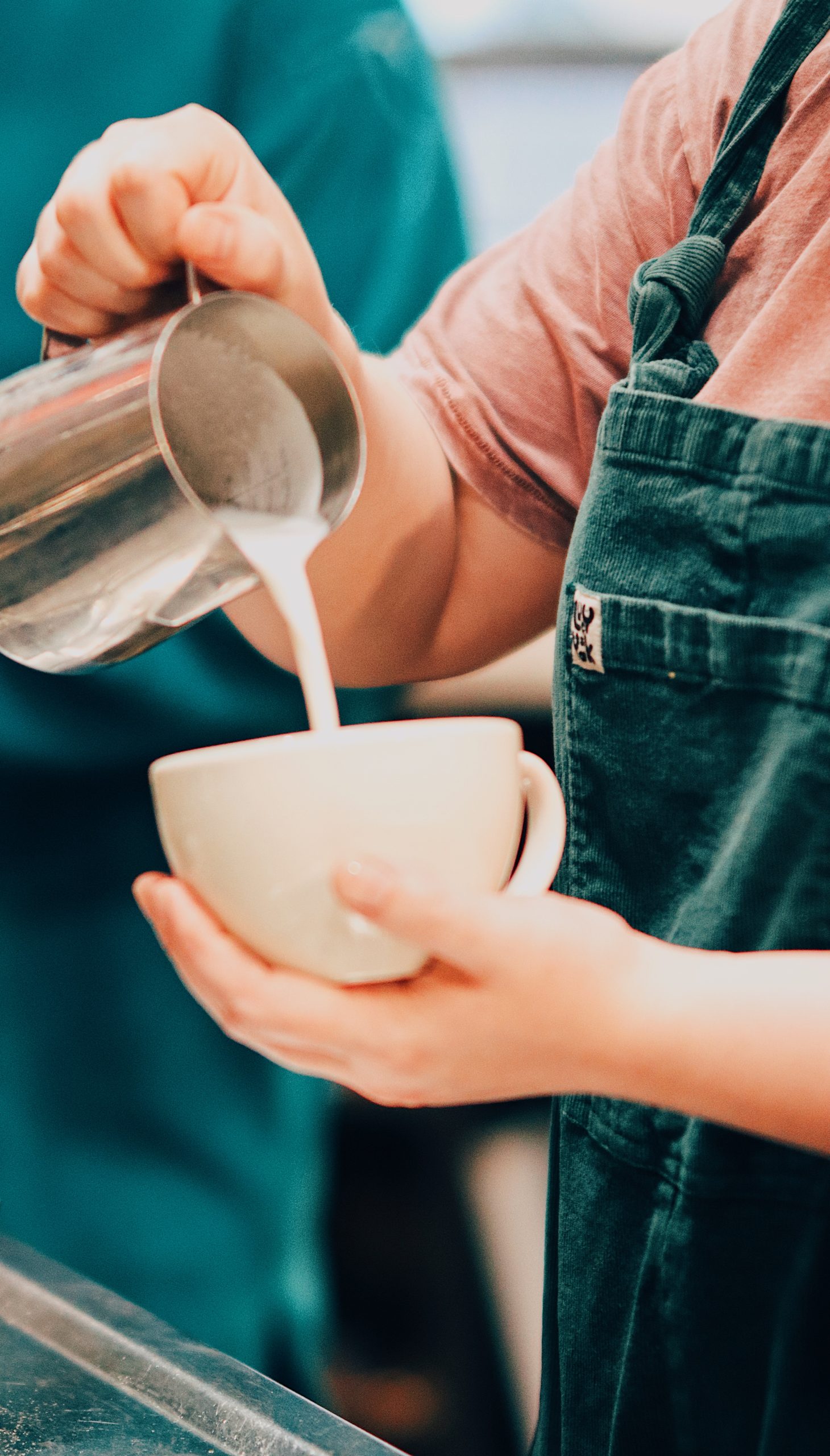
Roadhouse Joe Coffee is the house brew at Zingerman’s Roadhouse, specially created by Zingerman’s Coffee Company for the Roadhouse’s 2003 opening. (Are you new to Zingerman’s? The Roadhouse is our full-service restaurant and bar on Ann Arbor’s west side, known for its mac and cheese, barbecue, and more.) As Zingerman’s co-founder Ari Weinzweig tells it:
Back then, we were already working to get going on what was soon to be opened as Zingerman’s Roadhouse. Our intention, as per the vintage neon sign (done by Mark Chalou, “Mr. Neon,” with old neon tubes he found in a warehouse in Detroit), was to serve “Really good American food.” To go with it, we knew we would also need a really good American cup of coffee, a cup that consistently would please nearly every (no one gets ’em all) palate. The result was—and still is, decades down the road—Roadhouse Joe.
Roadhouse Joe is beloved in its original form, of course, but its popularity has continued to grow throughout the Zingerman’s Community of Businesses (ZCoB), too, as over the years, Roadhouse Joe has evolved to be a key ingredient in other Zingerman’s-made products. Here are all of the ways you can enjoy it, from the original coffee blend that started it all to an improvement made from a buzz-worthy switch and more.
1. Roadhouse Joe Coffee

Comprised of not just one type of bean, but an ever-evolving combination, Roadhouse Joe has remained one of the Coffee Company’s most popular blends since its debut. “The point of a blend—as opposed to the many single origins we do,” Ari explains, “is that we can adjust it a bit regularly to keep the flavor profile consistent.” Currently, the Roadhouse’s signature coffee (psst: weekly breakfast Blue Plate Specials include a free cup!) is a crowd-pleasing blend of Papua New Guinea, Costa Rican, Indian, and Brazilian Peaberry beans. Designed to complement food from breakfast through dessert, the Coffee Company describes this blend as emphasizing body and balance over sharpness and acidity. Steve Mangigian, long-time managing partner and head roaster at the Coffee Company says,
I believe today’s Roadhouse Joe is one of the best blends on the market. It’s smooth, rich, full-bodied, clean, and craft-roasted to highlight the nuances of each of the coffees in the blend. India for a little pepper and spice, Brazil for its nuttiness, Costa Rica for the body and richness, and Papua New Guinea for adding a solid base of cocoa; all designed to complement each other when it strikes the palate!
Enjoy a cup at the Roadhouse or visit the Coffee Company to taste the difference in brewing methods. At the Coffee Company, you’ll notice their Big Brew Board, a board that outlines the different flavor profiles each type of coffee can have depending on its preparation. Of the Roadhouse Joe, the Coffee Company crew says, “Amazing in a Chemex, which highlights the sweetness and complexity. The Aeropress gives it a wonderful thicker body with a nice dried fruit finish. In the press pot, we noted flavors of rye, wood, and spice.” To brew up a batch at home, pick up some beans at the Coffee Company or Deli, or ship a bag to your favorite coffee connoisseur.
2. Rhode Island Coffee Milk
Coffee milk is a cold drink made with coffee syrup and milk. The Roadhouse’s version starts by slowly cooking Roadhouse Joe coffee and sugar until it reduces to a rich, thick syrup, and then the housemade syrup is mixed with milk and cream from Calder Dairy. As the name suggests, coffee milk is the official beverage of Rhode Island, but it has a pretty solid local following, too, at least among Roadhouse regulars. And, interestingly enough, it actually has a local connection, too. Janice Longone was an esteemed food historian who most of her life in Ann Arbor. She hosted a radio show, “Adventure in Gastronomy,” on Michigan Radio, founded the Culinary Historians of Ann Arbor, and donated her extensive culinary archive to the University of Michigan, which became the Janice Bluestein Longone Culinary Archive. And, as she mentioned one day in passing to Ari, her uncle invented coffee milk. As Ari explains:
Jan’s Uncle Meyer was a Russian-Jewish immigrant who loved to tinker with things. And, according to legend, he took the Rhode Island love for strong, sweet coffee—likely based in the heavy concentration of both Italians and Portuguese people living there—and turned it into a cold drink.
Head to the Roadhouse to try Ann Arbor’s take on an East Coast classic. When the weather’s nice, we recommend sipping yours outside in Roadhouse Park.
3. Red Rage Barbecue Sauce
Red Rage also made its debut when Zingerman’s Roadhouse opened, but the recipe had been in development for years—decades, actually! This barbecue sauce was created by Chef Alex Young, a James Beard Award-winning chef, and former Roadhouse managing partner and chef, when he was just 13 years old! As the story goes, like a typical teenager, Alex invited friends over one day when his parents were out of town. In perhaps a not-so-typical teenage move though, it was a hundred people that were invited over… for a barbecue! He made the first version of the Red Rage we know and love today (and presumably ticked off his folks in the process!). Its name is likely due to the fact that it’s a tomato-based sauce with a kick, but we like the idea that it could have originated from a rager that had Young’s parents seeing red!
The recipe has been tweaked slightly over the years, mainly to swap in higher-quality ingredients, as we love to do here at Zingerman’s. Its fantastic full flavor comes from spices (like Turkish Urfa pepper, Tellicherry black pepper, chipotle peppers, and Mexican piquin peppers) that are balanced out with some sweetness (Muscovado brown sugar, molasses, and honey) and acidity (ketchup and apple cider vinegar), plus some pilsner and Roadhouse Joe coffee, of course. Don’t let the name (or those chile peppers) leave you concerned that indulging in a little BBQ will leave your mouth on fire. As Mo Frechette, Zingerman’s Mail Order managing partner says, “There is heat, but it’s a creeping, seeking heat that never gets in the way of the food.”
Head to the Roadhouse to enjoy Red Rage on a rack of ribs. Ship a bottle to a fellow BBQ lover from Mail Order, or order a few for yourself and pick up your order from their Warehouse Shop. Or mix up a batch for yourself at home. Use it on your favorite barbecued meats of course, but also try it slathered on a burger, drizzled into a burrito, swirled into mac and cheese, or as a more flavorful stand-in for ketchup with fries.
4. Spicy Coffee Rub
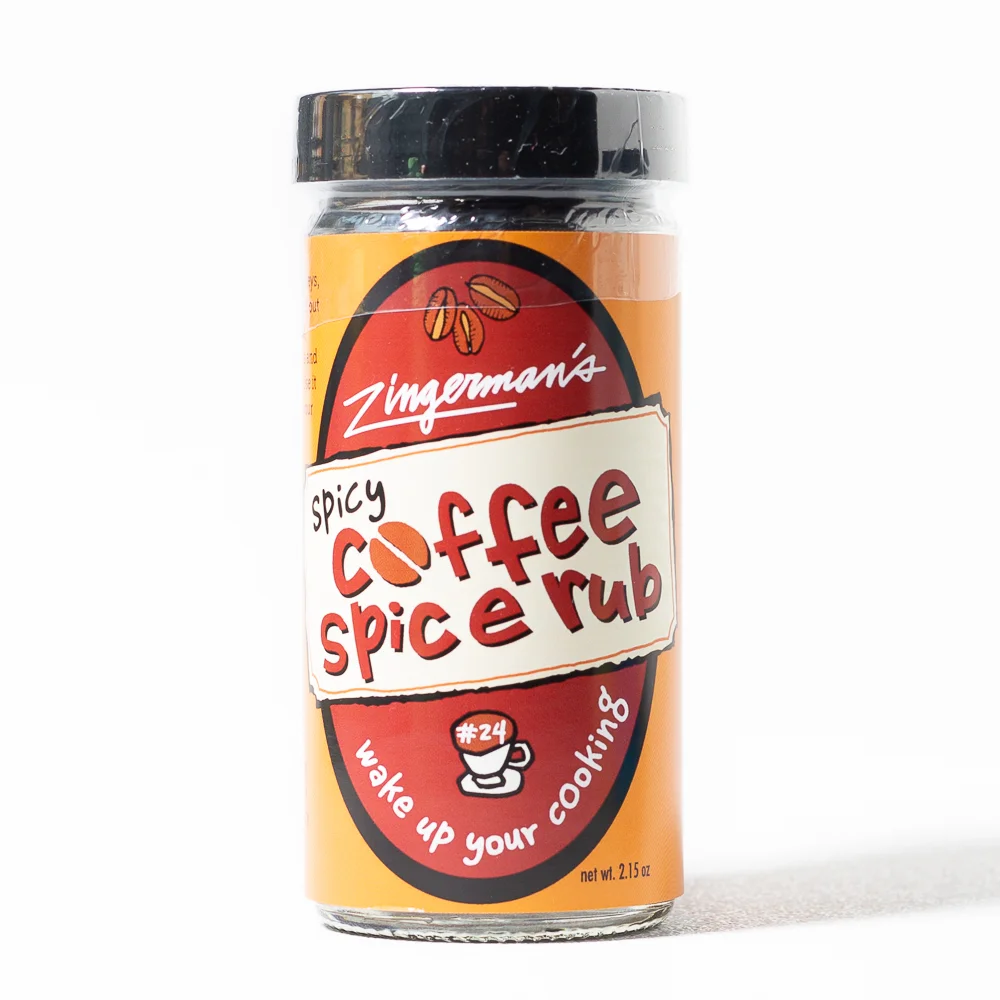
This intensely flavorful blend is packed with Urfa pepper, Tellicherry black pepper, cloves, sea salt, and yes, Roadhouse Joe coffee. Just like Red Rage, the Spicy Coffee Rub was created by Alex Young a few years after the Roadhouse opened. Young developed it with turkey in mind, so it was initially used on roast turkeys and a turkey sandwich dubbed the Dexter Reuben. Francine Maroukian lauded the blend in Esquire magazine as a way to make your Thanksgiving turkey memorable, saying, “One little jar will leave your turkey succulent and beautifully browned. Believe us, your guests will appreciate the gesture.” (Should you prefer to let someone else handle the bird, coffee spice-rubbed turkey reappears on the Roadhouse’s Thanksgiving To-Go menu—and, fair warning—then quickly sells out). The spice blend’s versatility was quickly uncovered though, so over the years it’s been featured in all sorts of Roadhouse specials including chicken, pork, and wild boar.
If you’re ready to wake up your cooking, grab a jar of Spicy Coffee Rub at the Deli or have Zingerman’s Mail Order ship you one. Follow Ari’s lead and try it on catfish, potatoes, or roast chicken (find his recipe for Roast Chicken with Bacon and Spicy Coffee Spice Rub on page 200 of Zingerman’s Guide to Better Bacon).
5. Coffee Gelato (aka Roadhouse Joe-lato)
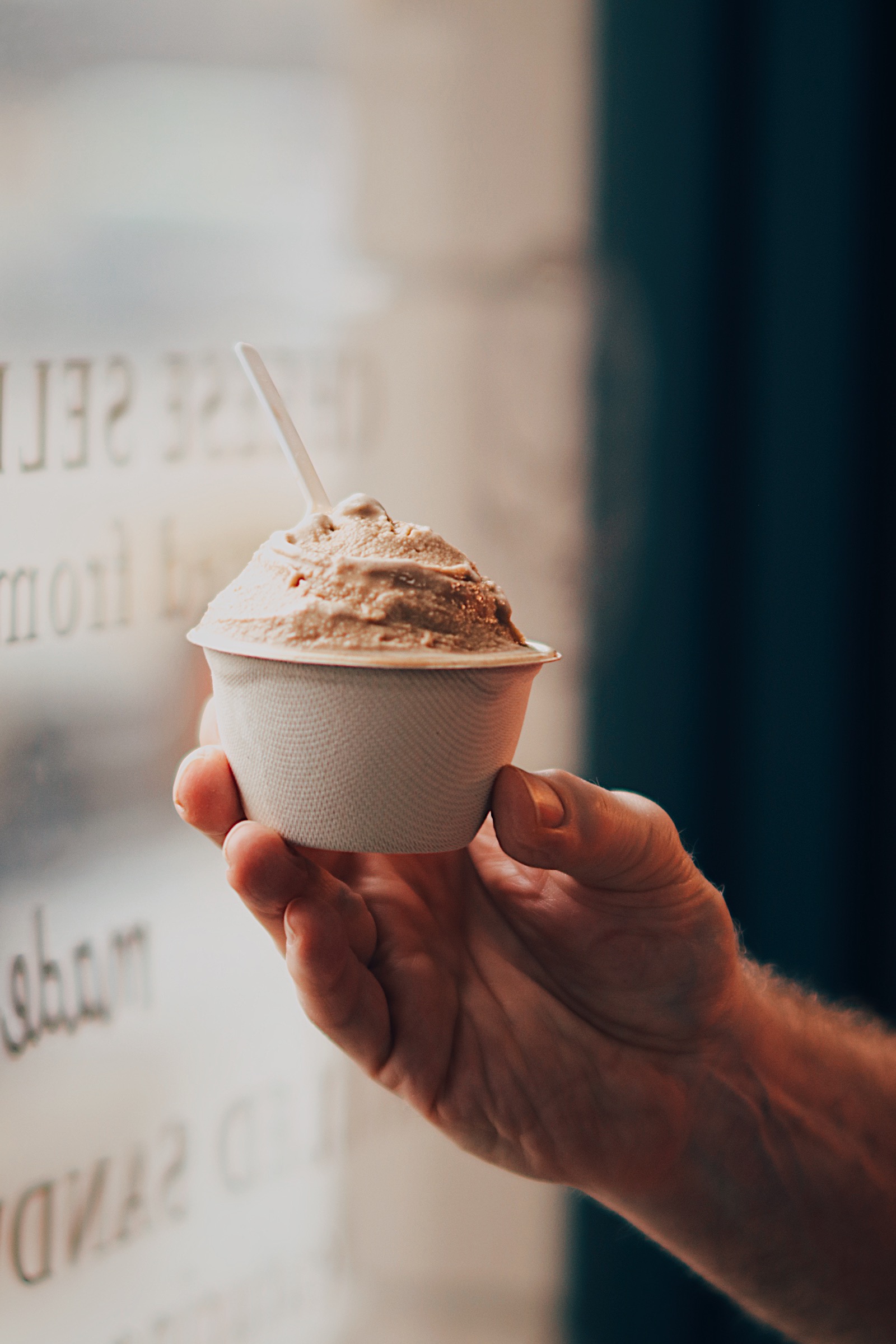
It doesn’t take much to imagine Roadhouse Joe’s smooth flavor churned into a creamy batch of gelato, especially if you typically take your coffee with a splash of cream or milk. Luckily for all of us, there’s no imagination necessary, since that’s what the Creamery is doing! In 2023, they updated their coffee gelato to feature Roadhouse Joe—quickly earning itself the nickname of Roadhouse Joe-lato. Using this best-selling brew along with milk and cream from Calder Dairy—one of the last farmstead dairies in Michigan—and demerara sugar created a gelato with a jolt of big, well-balanced coffee flavor. Gelato & Retail Manager Lexi Stand declares, “It tastes so good!”
Pretty sure we don’t need to tell you how to savor a scoop of gelato, but just in case… try one straight up, paired with another Creamery gelato like Vanilla or Chocolate Hazelnut, or doused in espresso for an affogato with serious pick-me-up power. Pick up a pint at the Cream Top Shop or the Deli, or enjoy a scoop for dessert at the Roadhouse. Flavors in the Creamery’s case vary, but when you spot the Coffee Gelato you can enjoy a scoop or two on the spot. Or, enjoy it in one of the many other ways they finesse their frozen treats, like in a shake, malt, float, or frozen cooler—in which the flavor of your choice is blended with any soda flavor.
6. Mothfire RoHo Joe Stout
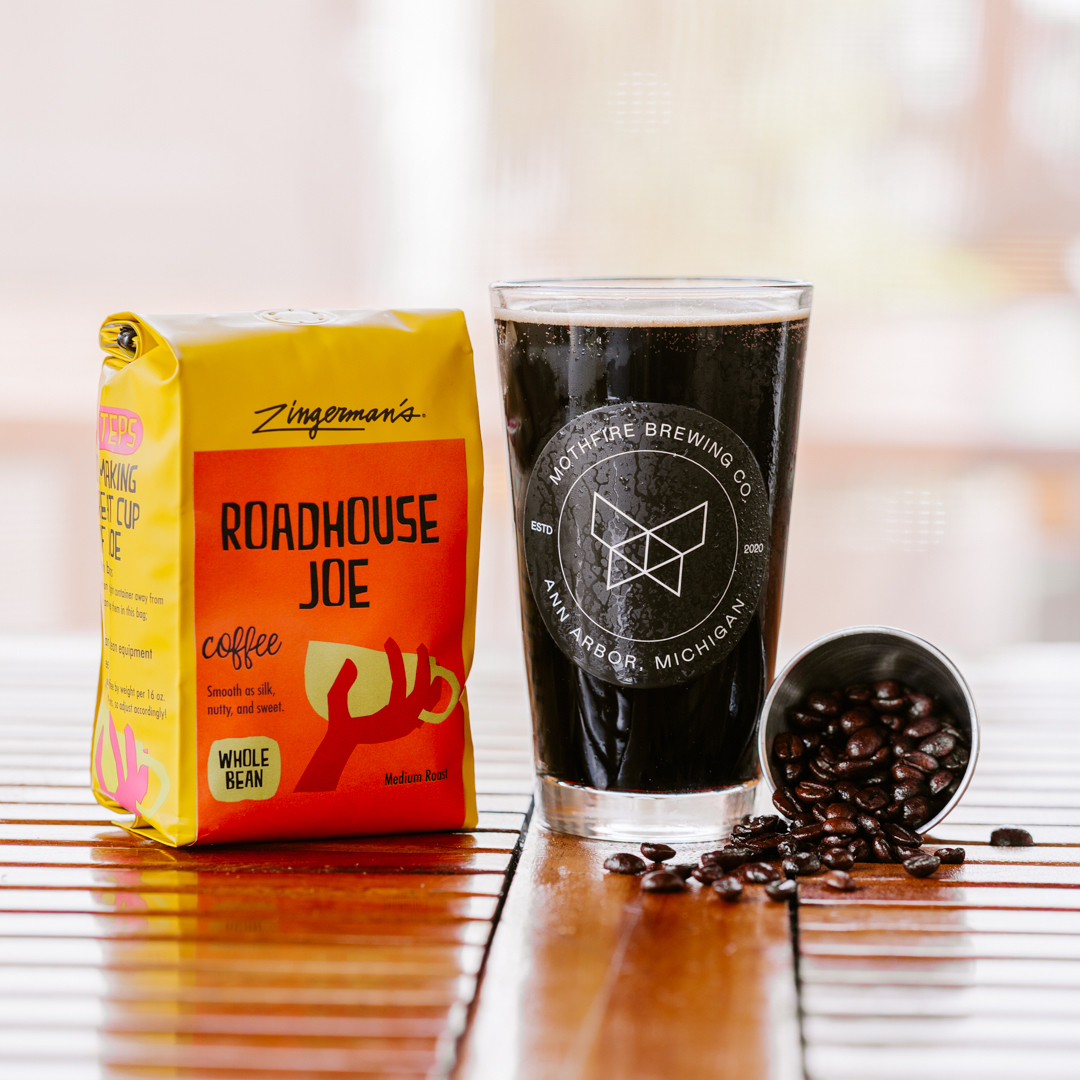
Not only has Roadhouse Joe conquered flavor sensations from savory spices to sweet treats, but it’s also proved that it can move from coffee mug to pint glass (or tulip glass as the case may be, but you get what we were going for, right?). Mothfire Brewing Company has been making a rich, roasty stout with Roadhouse Joe since 2021. This flavorful collaboration began at the picnic tables in Roadhouse Park, when Mothfire head brewer Alexis Jorgensen started envisioning what the recipe might look like. As Ari describes:
The beer really is something special. When you sip the stout, the coffee comes through without dominating the whole drink; it hints clearly of coffee, and yet it’s something else altogether. The RoHo Joe Stout has a good hint of vanilla, a touch of sweetness, and all the grain-forward fullness you’d expect in a good stout!
The sweetness is due to the brew, of course, but perhaps also to the bond of Ann Arbor townie businesses who share a passion for great ingredients and community. As Noah Kaplan, one of Mothfire’s founders, elaborates:
We believe that craft breweries are an essential part of a community’s culture. A place to create beers and atmospheres that are truly unique to the region, and a place to bring people together. We focus on collaboration, creativity, and quality craftsmanship. We also focus on using local ingredients and building on local culture.
We definitely don’t need to tell you how to drink a beer. (Other than to enjoy this sensational sipper responsibly, but you already know that.) Try the RoHo Joe Stout on draft or pick up a 4-pack at the Roadhouse. Cans are also available at Mothfire Brewing Company, select Plum Market locations, and (soon) other Zingerman’s locations.
Who knows where Roadhouse Joe might moonlight next!
To keep up with the buzz on all of the latest happenings in the Zingerman’s Community, follow us on social media: @zingermanscommunity on Instagram and Facebook, and @zingermans on X (formerly Twitter).
Author: Lindsay-Jean Hard
All about achaar (and Brooklyn Delhi, too, for that matter!)
Achaar (uh-char) is a South Asian relish condiment. It’s often referred to as an Indian pickle or South Asian pickle, but as Chitra Agarwal, founder of Brooklyn Delhi and author of Vibrant India, explains, “it has nothing to do with the flavor of dill pickles and more to do with, say, kimchi (Korean), sriracha (Thai), or harissa (Tunisian).” Adding, “For those that are unfamiliar with achaar, it’s a spicy, savory, sour, and sweet relish made from local vegetables, fruits, spices, and oil.”
Agarwal and her husband, Ben Garthus, launched Brooklyn Delhi to share modern Indian pantry staples, the kinds of condiments they loved, but couldn’t find on grocery store shelves in the U.S. Brooklyn Delhi thoughtfully sources the best ingredients they can find for their plant-based, small-batch sauces, never including preservatives or artificial ingredients. Brooklyn Delhi’s recipes are rooted in time-honored Indian culinary traditions and layered with Agarwal’s own modern spin, like using less salt, so the flavor of the produce is really able to shine through.
Our Achaar Flavors
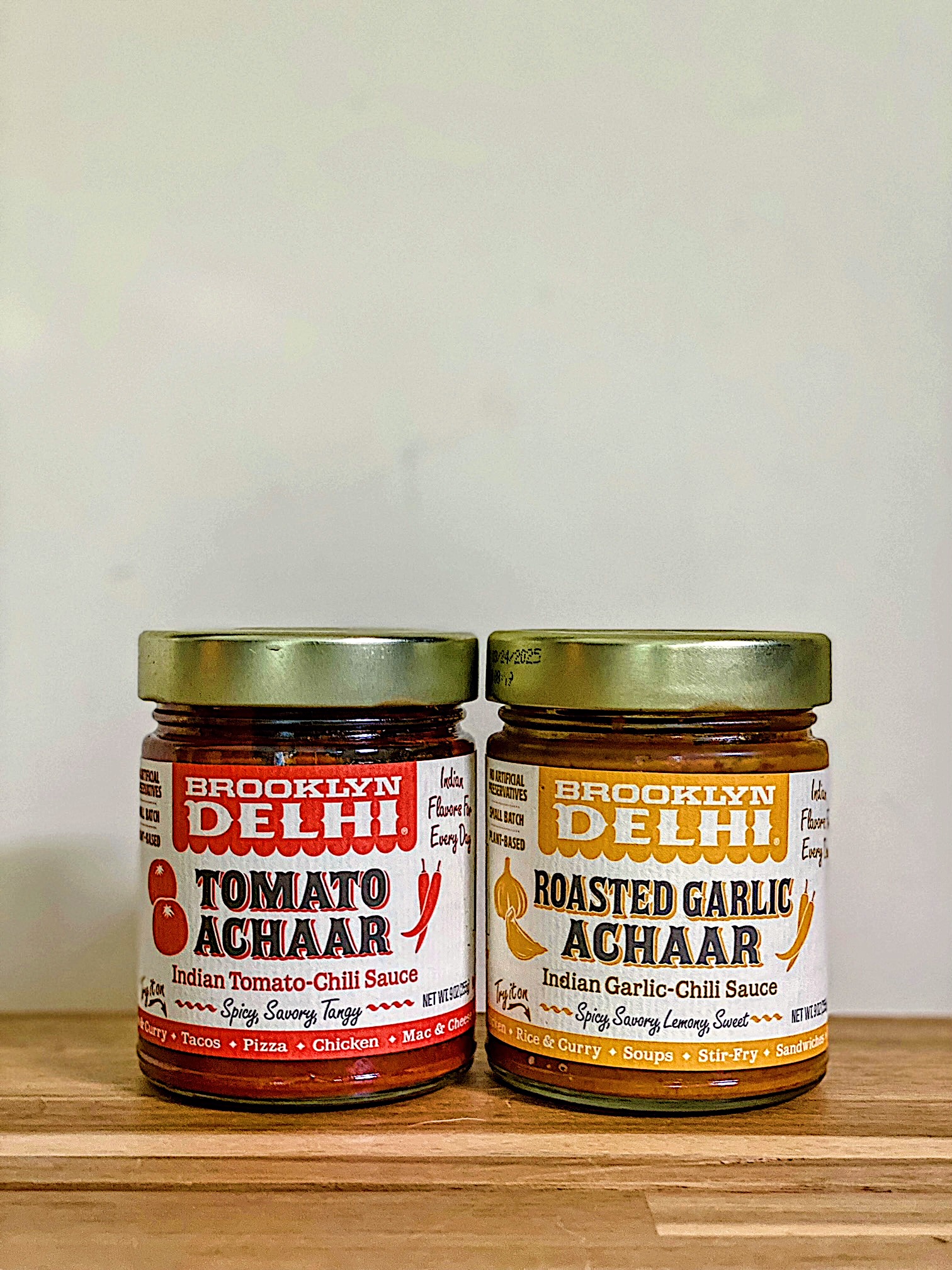
We carry two of Brooklyn Delhi’s achaars, Tomato Achaar and Roasted Garlic Achaar:
- Tomato Achaar is savory, spicy, and tangy; made with tomatoes, tamarind, unrefined cane sugar, sesame oil, and a blend of spices including fenugreek, turmeric, and ground red chili peppers.
- Roasted Garlic Achaar is spicy, sweet, and bright; made with roasted garlic, lemon juice, canola oil, and again, a bit of sugar and a blend of spices including turmeric and ground red chili peppers.
We’ll happily take the blame if they become your new go-to condiments, and you won’t be alone. Of these achaars, New York magazine says, “Hot, sweet, sour, bafflingly complex, and addictive enough to make you consider carrying a jar of it wherever you go.” Brad Hedeman, Marketer Manager at Zingerman’s Mail Order, is a big fan of their Roasted Garlic Achaar, saying, “Flavor-wise, it’s got a big garlic punch, then a note of ‘spicy-lemon-sweet-rich-bright.’ It’s everything at the same time, all those sensations all at once. Wicked stuff.” Traditionally, achaar is eaten with rice, curry, dal, and yogurt, but if you’re already ready to branch out, we have a few more ideas to get you going.
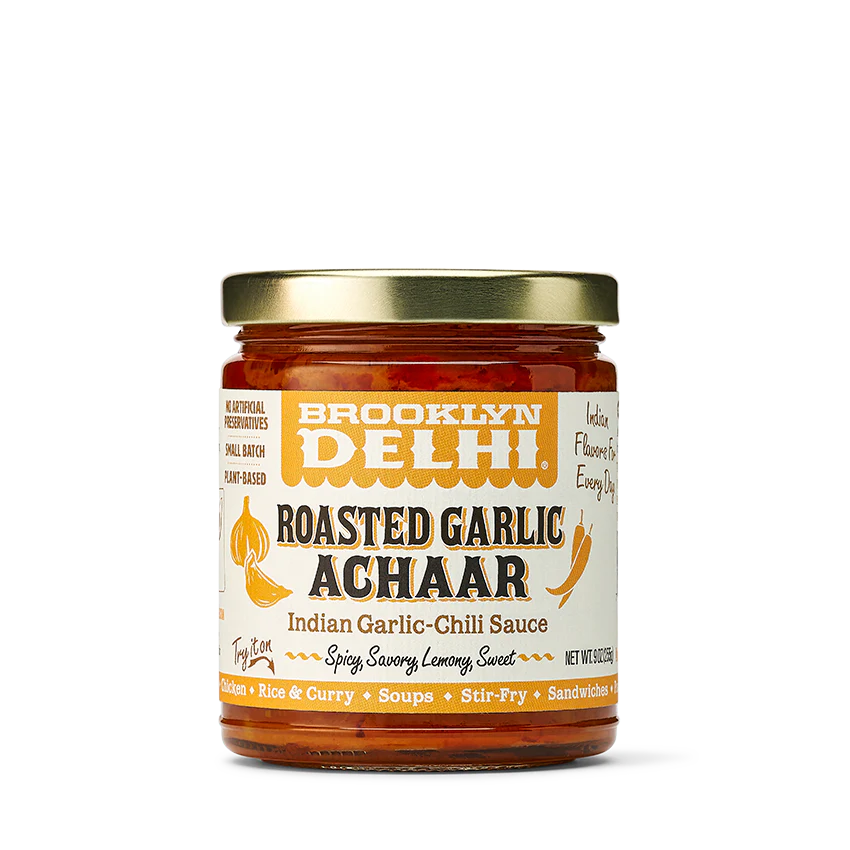
Photo credit to Brooklyn Delhi
5 of Our Favorite Ways to Use Achaars
- Stir into soups and stocks. Use Roasted Garlic Achaar to give greater garlicky depth to dishes like miso soup. Swirl Tomato Achaar into brothy braised beans for an extra kick or into tomato soup, like the Bakehouse’s Creamy Tomato De-Vine.
- Top your toasts. Ari Weinzweig, Zingerman’s co-founder and CEO, likes to top Sicilian Sesame Semolina bread from the Bakehouse with Fresh Goat Cheese from the Creamery and Tomato Achaar, adding, “If you’re like me, once you try it, you’ll find yourself putting it on pretty much everything! In the “Breezy Breakfasts” cookbooklet from Zingerman’s, one suggested toast combo is Better than San Francisco Sourdough with Tomato Achaar and avocado.
- Give your pizza some pizazz. Brooklyn Delhi suggests using their Tomato Achaar instead of tomato sauce or topping a pizza with sautéed mushrooms tossed in the Roasted Garlic Achaar.
- Spice up your sauces, dips, and dressings. Stir some Tomato Achaar into your pasta sauce, shakshuka, or labneh. Add even more depth of flavor to already spicy buffalo wing sauce and gochujang sauce. Swirl a spoonful of Roasted Garlic Achaar into hummus or mayonnaise.
- Treat it like you would any other condiment. Spoon some on scrambled eggs, dollop it on top of grilled meats, spread it on a sandwich, and use it to garnish pasta dishes. Lindsey Rampton, Web Services Manager at Zingerman’s Creative Services stocks up on Tomato Achaar during Zingerman’s Mail Order’s annual Summer Sale, explaining, “I always keep some handy for times when I need a quick cheese board pairing or more spice in a rice bowl.”
So far, I’ve used the Garlic Achaar to make next-level garlic bread and swirled it into sour cream for leftover falafel that was sorely in need of saving from its dry, crumbly self. I’ve dabbed the Tomato Achaar onto fried eggs and leftover pizza. (Are you sensing a theme here? These condiments take leftovers from something you eat out of guilt to something you look forward to.) I’m a big fan of Yotam Ottolenghi’s iconic Eggplant with Buttermilk Sauce from his cookbook Plenty, so next on my to-make list is Brooklyn Delhi’s twist on it with Garlic Achaar. (Pro tip: Their website has a wealth of tempting recipes.)
Ready to squeeze the day and try them for yourself?! Get Brooklyn Delhi’s achaars at Zingerman’s Deli or let Zingerman’s Mail Order ship one (or both the Tomato Achaar and the Roasted Garlic Achaar) to your doorstep.
Want more? We want to hear from you over on our social media platforms. Share your experience or your favorite food at any of our Zingerman’s businesses. We will happily share it on our Instagram and Facebook @Zingermanscommunity.
Author: Lindsay-Jean Hard

We’re governing with grace… and Grace (Grace Singleton, that is!)
“Is Zingerman’s still run by its founders?” you ask. That’s a great question. We’ll answer with a tale, both old and new (just like our pickles!). What began with the Delicatessen, founded in 1982 by Paul Saginaw and Ari Weinzweig, now includes 11 food and service businesses, 18 managing partners, 800 employees, and a council of leaders among leaders (hang tight, we’ll explain that in a minute).
An Overview of Zingerman’s Governance
Since 1994, the Zingerman’s Community of Businesses (ZCoB) has been steered by our Partners Group (PG), a group that includes Ari and Paul, the ZCoB’s managing partners (the individual business owner-operators), and staff partners (staff members who own a Community Share; they serve two-year terms). As Ari explains:
It’s where we govern the Zingerman’s Community of Businesses—we use consensus decision-making there to lead the organization. The PG makes decisions on organization-wide issues, like deciding to approve our new 2032 Vision or our new Statement of Beliefs. Or if there was, in a strange sci-fi sort of scenario, just for conversation’s sake, let’s say a global pandemic, the PG is where we would decide how to deal with it.
One important piece that the 2032 Vision outlines is the ZCoB’s evolution of governance:
… we’ve seen a successful transition from Ari and Paul as founders heading the Zingerman’s Community of Businesses (ZCoB) to a mode of governance that will last beyond the tenure of any individual. While long-time ZCoB leaders continue in important roles, a couple of new “generations” of insightful, collaborative folks have stepped forward.
That mode of governance is the Zingerman’s Stewardship Council, a five-member group created in 2020 as part of a succession plan to transition the leadership of the organization from its founders to the other managing partners. To be clear, the Partners Group isn’t going anywhere, rather, as Ari says, “The Stewardship Council is filling the role Paul and I have filled for many years as ‘leaders among leaders.’” He adds:
Our main focus in doing this work with the Stewardship Council is, by far and away, looking at how we can do what we do here at Zingerman’s ever more effectively. We want it to be a way to help lead the ZCoB in becoming an ever-bigger contributor to the community of which we’re a part. We want to support succession and inspire future success. We’re committed to creating a governance model that will help both the organization and everyone in it to thrive for many decades to come.

The original council members include Amy Emberling, Zingerman’s Bakehouse co-managing partner; Toni Morell, Zingerman’s Mail Order co-managing partner; Tom Root, Zingerman’s Mail Order co-managing partner; Ron Maurer, Zingerman’s Chief Administrative Officer and Zingerman’s Service Network managing partner; and Ari Weinzweig. Council members serve three-year terms, and just like the Partners Group, decisions are made using consensus. In June of 2023, we reached the end of the first set of three-year terms. The Council has been designed so that one of these original managing partners will come off each year—the first was Ron Maurer who has his eye on retirement in 2023 after more than two decades with the organization—and a new one is selected. Ari explains how that happens:
Our agreed-upon process for selecting members is that Paul and I, as co-founding partners, consult with our staff partners (since they’re not eligible to be on the Council) and others whose views we value, to make the decision. After a LOT of conversation, and honoring what we believe is the best decision for the organization, we chose the next member.
This time, Ari and Paul offered the spot to Grace Singleton, co-managing partner of Zingerman’s Deli since 2004. Grace knew from the beginning that she was destined for a life full of food (and she may or may not have thought the food industry would be glamorous thanks to a New Orleans restaurant where she received special treatment, sitting at the captain’s table and sampling Frangelico (a hazelnut liquor) at the age of 13!). Grace received her culinary degree at Paul Smith’s College in New York and managed restaurants across Ohio (we don’t hold this against her) and Michigan.
She found her way to Ann Arbor for the role of general manager at the Gandy Dancer and became a fan of Zingerman’s Deli. Eventually, she made the jump, calling it “the very best job in the food industry,” and in 2004, she stepped up from retail manager to co-managing partner. Since then, Grace has overseen the gold level LEED-certified Deli expansion project (2010–2014), the opening of Zingerman’s Greyline event space (2016), the addition of virtual tasting events for fans around the country (2021), and more, all while continuing to lead the day-to-day of Deli catering and retail specialty foods. (Impressive, right?!) Of this new role and her latest opportunity to impact the Zingerman’s organization and the Ann Arbor community, she says:
I’ve been here for more than 20 years and I’m really invested in the transition of our CEO’s roles. Ari in particular set the stage with his dedication to doing business differently and how we govern is an important part of that. I look forward to working toward our future with this committed group.
Want to read more? Ari wrote about Grace’s addition to the Council and the work of the Stewardship Council in Ari’s Top 5, his weekly e-newsletter, saying, “Success leads to succession work which, when done well, helps create more success. It’s a very virtuous and very inspiring cycle to be a part of.”
Author: Lindsay-Jean Hard
5 Ways to Enjoy: Tunisian Preserved Lemons
What are preserved lemons?
At the risk of getting a (well-deserved) eye-roll, they are exactly what they sound like—lemons that have been preserved. This salt-cured citrus is commonly used in North African, Middle Eastern, and South Asian cuisines. Originally, they would have been preserved to last well beyond their season (as all preserved things are); now they’re a year-round staple. Preserved lemons can add an umami-laden depth of flavor to dishes that just can’t be matched by a squeeze of fresh lemon.
What’s special about Tunisian Preserved Lemons?
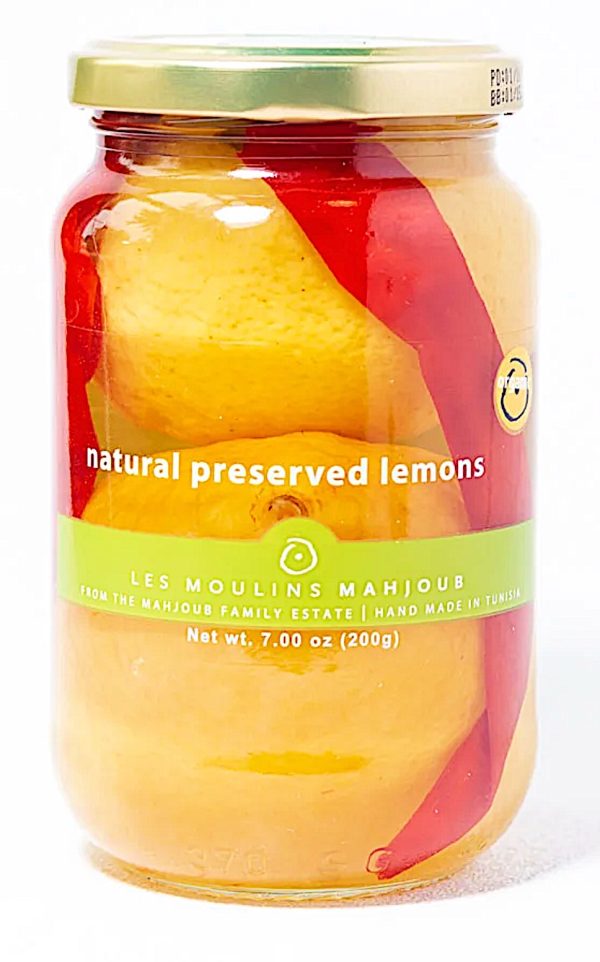
The preserved lemons we choose to use and sell at Zingerman’s come from our friends, the Mahjoub family. Tunisian lemons are known for their intensity and concentrated citrus flavor. Like all Les Moulins Mahjoub products, their preserved lemons are organic, produced using traditional farming methods, and processed with no artificial ingredients or additives. As the Mahjoubs say,
We haven’t invented anything new. The culinary traditions of the southern Mediterranean, particularly those of the Berber culture, are alive and well. They are nourished by the fundamental elements: the sun’s fire, and water, often with the addition of a little salt from the sea. But there’s one more essential element: time. For these natural transformations to take place, time is key.
Each jar contains two or three whole Tunisian lemons and a mild red pepper to add an additional layer of flavor. Recipes will sometimes call for just the rind of a preserved lemon, but the entire lemon is edible and can be minced, sliced, or even puréed. A little goes a long way, so that jar could be used to make a dozen (or more) dishes and it will last for months in the fridge.
5 of Our Favorite Ways to Use Tunisian Preserved Lemons
It actually might be easier to come up with a list of where not to use preserved lemons! As Paul Swaney, HR Generalist at Zingerman’s Department for People says,
I learned from Zingerman’s Mail Order that you can improve any dish by using preserved lemons. I have taken that to heart and it has proven to be true. I add preserved lemons to pasta sauces, soups, and stews. I utilize preserved lemons on pizza and as a condiment for grilled sausages. They are great in salad dressings and omelets. In short, preserved lemons have changed my cooking and added new complexity to every dish that I prepare at home.
Come to think of it, maybe there aren’t any dishes that wouldn’t benefit from a little preserved lemon. Nevertheless, here are five more ideas to get you going with your jar:
- Coupled with chicken. A Moroccan chicken tagine might be the most popular example, but preserved lemons go well with simple braised or roasted chicken, and puréed, they can be used as a marinade.
- Added to pasta, legumes, or rice dishes. Preserved lemons and chickpeas are a classic duo. As are preserved lemons and lentils. The Mahjoubs have a recipe for a salad with preserved lemon, lentils, and their hand-rolled couscous. Connor Valone, Zingerman’s Deli specialty foods meat buyer and supervisor, likes to add a bit of diced preserved lemon to red lentil soup.
- Paired with seafood. You’ll often find preserved lemons paired with scallops or shrimp, but they’ll happily play with whatever seafood you’re in the mood for. Brad Hedeman, who does marketing and product selection for Zingerman’s Mail Order says, “Slip a few slices of preserved lemon into a whole fish before baking, then put a couple more slices on top before serving.” Zingerman’s co-founder Ari Weinzweig likes to make Spicy Tunisian Spaghetti with whatever seafood he has on hand—shrimp, squid, scallops, octopus, various types of fresh fish, even tinned sardines. For a lower-lift recipe, add a few thin slices to your next tuna sandwich.
- Don’t forget about the brine! Swaney’s found that the preserved lemon brine works beautifully as a substitute for olive juice in a dirty martini. Or add a splash to a Bloody Mary. You can also use the brine in a vinaigrette, in place of some of the vinegar or lemon juice.
- Used in desserts! For a salty-sweet pairing, drizzle thick slices of ripe watermelon with a preserved lemon vinaigrette. Preserved lemons can be used in ice cream, cookies, or even cake—you’ll find food journalist Claire Saffitz’s Preserved Lemon Meringue Cake recipe in her first cookbook, Dessert Person. Saffitz explains why this savory ingredient works so well in baked goods, saying:
Short of using extract or an impractically large amount of fresh grated lemon zest, it’s not easy to infuse lemon flavor into baking recipes, so I thought preserved lemons might be a cool and interesting way to flavor a cake… the resulting flavor was complex and floral and even better than I expected.
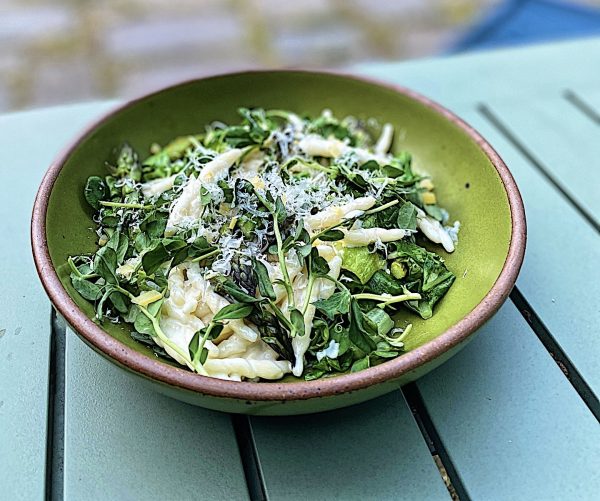
Personally, I’ve loved every dish I’ve made that’s called for preserved lemons, but it’s not an ingredient that I’ve tended to spontaneously reach for. Until now! Inspired by Swaney’s insistence that they’re a versatile kitchen workhorse and by Ari Weinzweig’s recent writings about Rustichella Trofie, I headed to the kitchen, intent on clearing out my crisper drawer and incorporating Tunisian Preserved Lemons. The resulting dish included a lot of vegetables (boy choy, asparagus, pea shoots, and Tokyo Bekana cabbage—a cross between Napa cabbage, bok choy, and lettuce), so I had reserved expectations for how it would go over, but after one bite my daughter exclaimed, “Yum! This goes on the ‘repeaters’ list Mom!” The preserved lemon I used, both the pulp and the rind, really did give the dish an added depth of flavor and take it from a ho-hum meal to something special. Here are the general guidelines to what I did, so you can make it your own and clear out your own stockpile of seasonal vegetables:
Set a pot of heavily salted water to boil, then wash and chop your vegetables—keeping thicker stem pieces separate from more delicate leafy greens. In a large skillet over medium heat, drizzle a little olive oil and sautée the vegetables. (For my dish, I started with minced garlic, then added the thicker stem pieces of the bok choy and cabbage, then the asparagus, then the leafier greens, reserving the delicate pea shoots to garnish the dish at the end.) While the vegetables are cooking, dump the pasta shape of your choosing into the now-boiling water and cook until al dente, reserving some of the pasta cooking water.
Once the vegetables are cooked, finely dice the rind of a quarter of a preserved lemon, sprinkle it over them, and just set the skillet aside. Make a sauce with about one cup of ricotta (I used Bellwether Farms), a healthy splash of the pasta water (enough to get it as saucy as you’d like), and about one tablespoon of preserved lemon pulp, then stir it into the pasta. (I blended it together with an immersion blender to get it really smooth and creamy, but you could forgo that, just finely chop up the pulp and mix it and the ricotta together with the cooked pasta, adding a little of the pasta water as needed—it won’t be as blended, but it will taste just as good.) To serve, pile vegetables in a bowl, top with the sauced pasta, and cover everything with a shower of grated Parmigiano-Reggiano.
Ready to squeeze the day and try them for yourself?! Get a jar of Tunisian Preserved Lemons at Zingerman’s Deli or have one shipped to your doorstep from Zingerman’s Mail Order.